The opportunity
Most people keep their savings in a bank account. It’s safe and simple, but Dutch banks pay around 1% or less. At the same time, decentralised lending markets like Aave and Morpho were consistently paying more on stable assets, but getting there meant wallets, protocols and terminology that most people would never touch. The higher yield existed. The access didn’t.
Why I saw it
This wasn’t a brief. I noticed the gap while following the market, and I recognised that Coinmerce was unusually well placed to close it. We already had licensing, custody, a euro on-ramp and the trust of our users. The hard parts of this product were things we had already built. That turned a nice idea into a realistic business case, so I put together a pitch.
Research
I compared how traditional banks, neobanks and crypto platforms present savings. Banks like ABN AMRO and bunq lead with safety and say little about returns. DeFi platforms lead with returns and leave users to judge the risk themselves. Nobody connected the two in a way a regular saver would understand. That became the positioning: the yield of DeFi lending, with the simplicity of a savings account.
The concept
Coinmerce Vault would be a separate brand. Users deposit euros, which are held as a regulated euro stablecoin and lent out through established lending markets. The user sees one balance, one rate and a projected daily payout. Running it as its own business let it reach people who would never open a crypto exchange, while still sitting on Coinmerce’s infrastructure.
MVP Design
I scoped the MVP to what was needed to prove the promise:
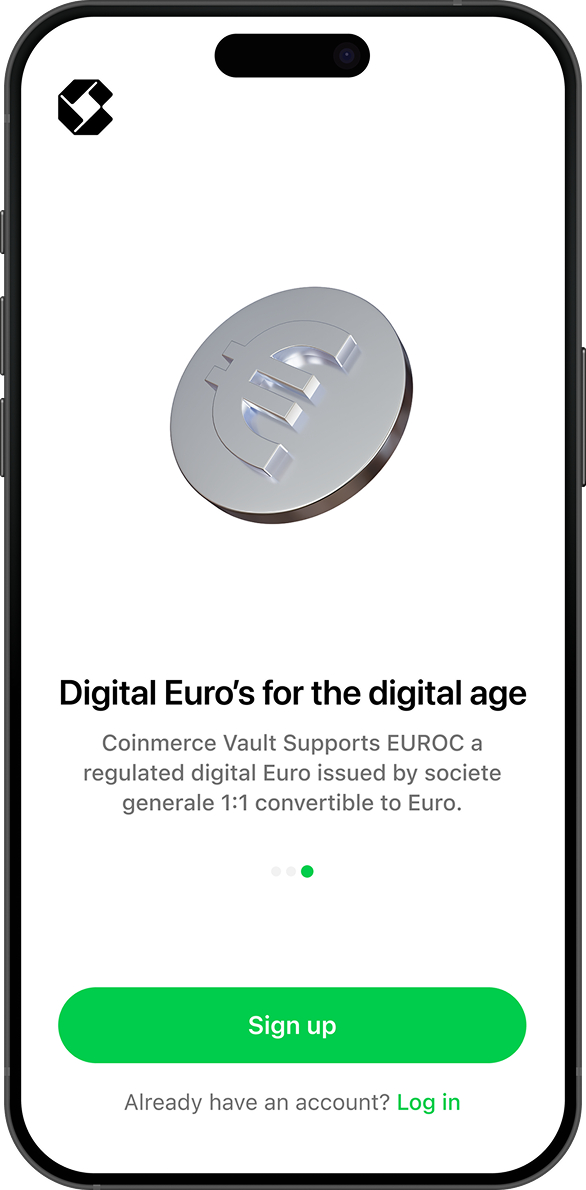
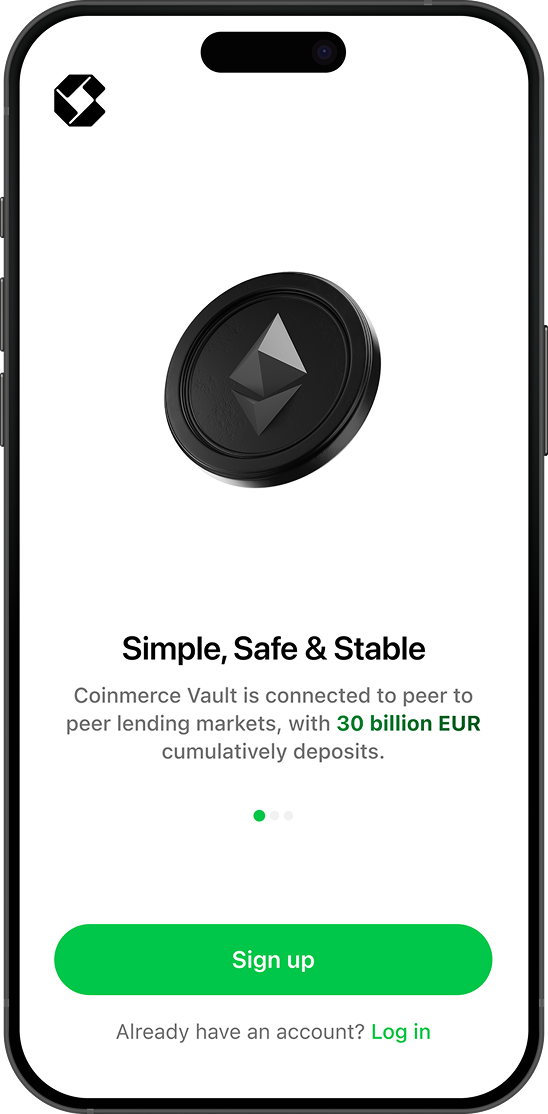
- Onboarding explains the digital euro in plain language before asking anything of the user.
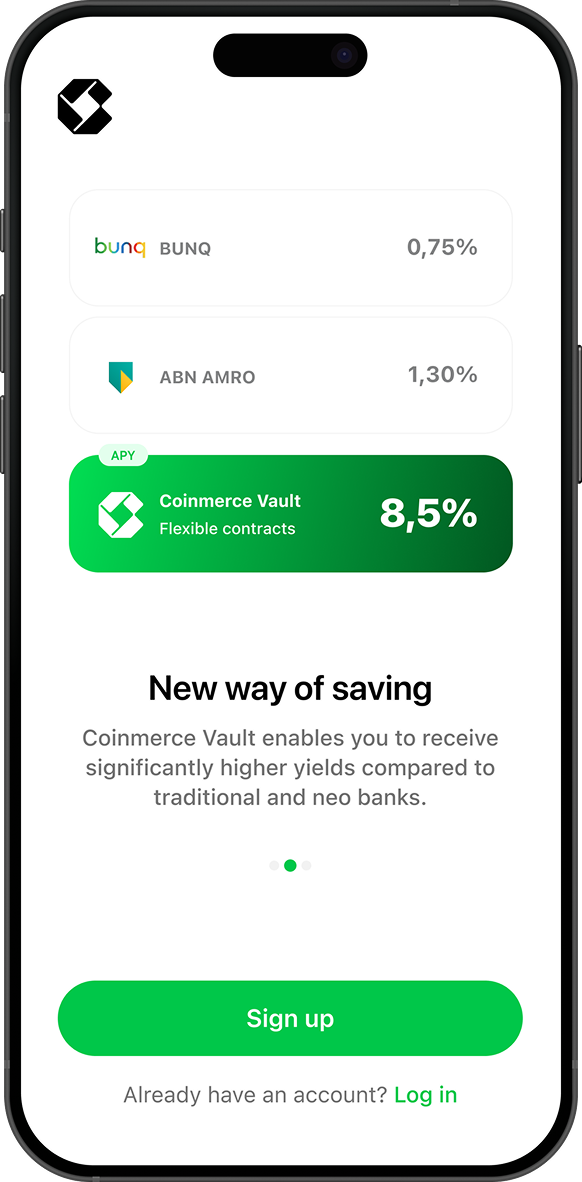
- The USP screen puts the Vault rate directly next to bunq and ABN AMRO. The comparison does the selling, so the copy doesn’t have to.
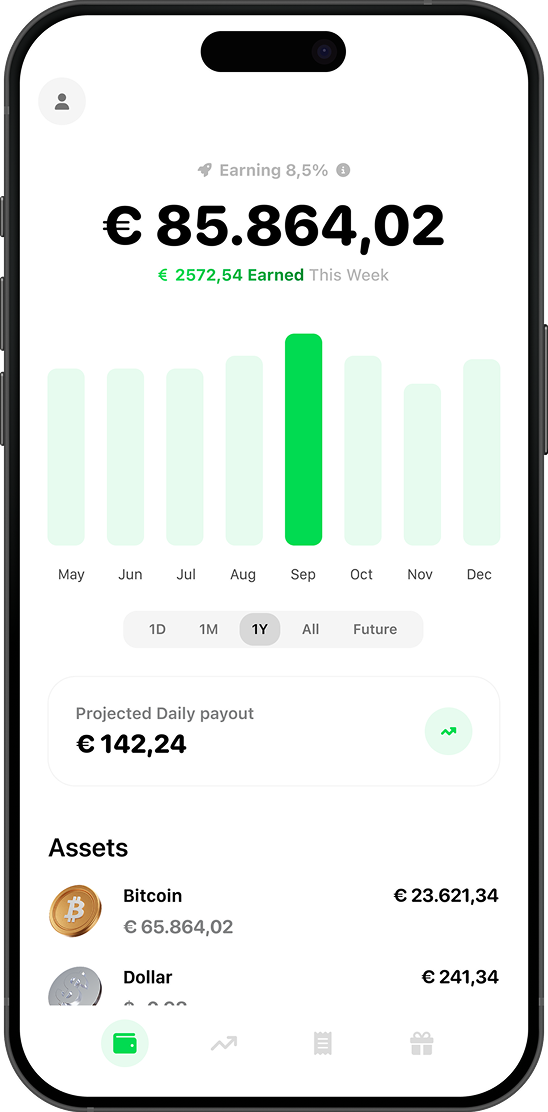
- The dashboard shows total balance, earnings this week and a projected daily payout. Earning should feel visible, not abstract.
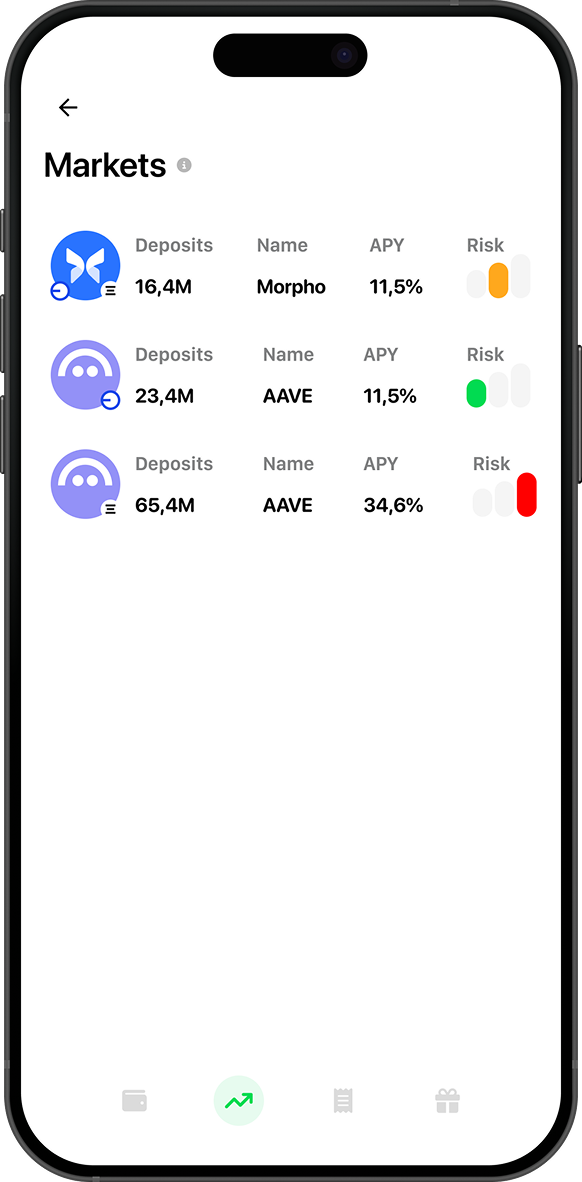
- Markets lists the underlying lending markets with deposits, APY and a risk indicator for each. Experienced users can see where their money goes. Everyone else can ignore it.
The principle throughout: make the return obvious and make the risk visible. A higher yield only builds trust if people understand what’s behind it.
The Pitch & outcome
I pitched the concept, research and MVP directly to Coinmerce’s founders and CEO. It was well received, but paused because of internal resources and a strategic decision to focus on the core platform. Six months later, a version of the idea launched at BLOX, one of Coinmerce’s sister companies.
What I took from it
Seeing an opportunity is the easy part. Making a case that survives the business’s real constraints is the actual work. A good idea can be right and still not be right for now, and the BLOX launch confirmed the opportunity was real. This project taught me to frame new ideas around what the company already has, what it would take, and why now.